

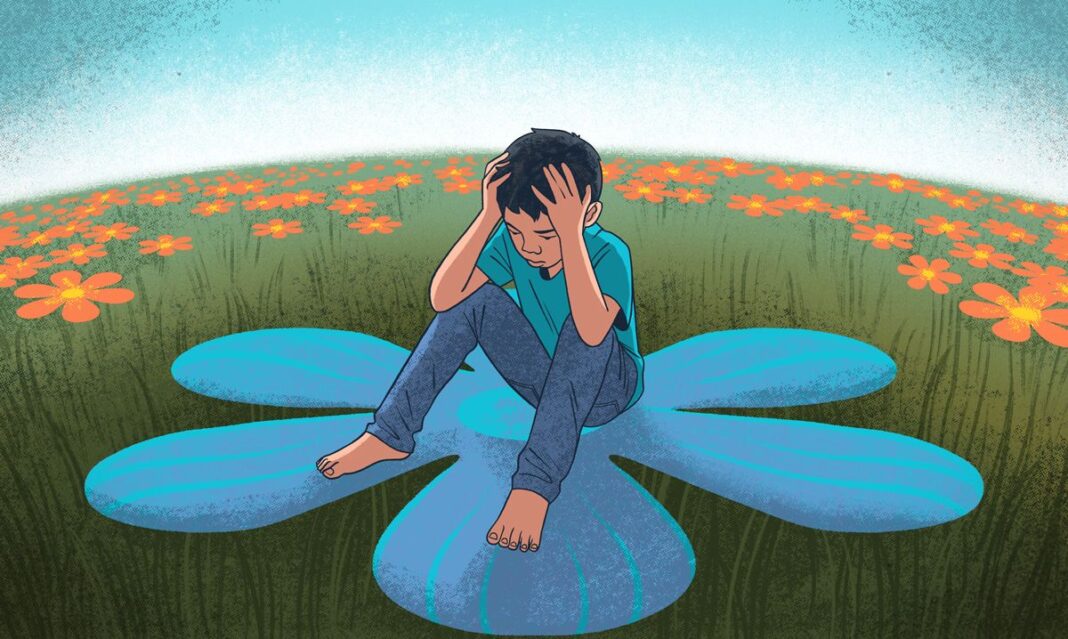
You’ve asked nicely. You’ve asked firmly. Still, your child refuses to get dressed, join the activity or finish their homework. It might seem like defiance, but in many cases, that resistance is actually avoidance behavior, a common response to anxiety in children.
We all put off tasks that feel stressful or overwhelming. Children do the same, especially when they’re navigating new experiences or feeling unsure of their abilities. Avoidance provides short-term relief but teaches the brain that escape is the best solution.
Avoiding situations can trick our brains into believing it is the only way to handle difficult moments, according to information from TRAILS to Wellness. Over time, the brain will “sound the anxiety alarm even louder” to push your child to avoid uncomfortable tasks, which makes things worse in the long run.
“For a preschooler who is learning how to participate in a classroom setting or more structured activity, you might see more avoidance behavior,” says Nikki O’Donnell, limited licensed psychologist and clinician at Viewpoint Psychology and Wellness.
O’Donnell, who is also a mom of two, explains that avoidance can look different depending on a child’s age and developmental stage.
A child’s behavior often communicates more than their words, especially when they don’t yet have the tools to express what they’re feeling.
What does avoidance behavior look like?
In younger children, avoidance may show up as tantrums, crying or pretending not to understand. They might leave the room, act distracted, or say “I don’t want to.”
As kids get older, the behavior may shift. Delays, drama or outright ignoring instructions are common signs.
“Parents will actually see this in really bright kids,” O’Donnell says, noting that children who appear advanced or mature may still struggle emotionally. “Sometimes that can be really difficult because it can cause a lot of anxiety in those kiddos.”
Avoidance also ties into a child’s need for control. If they feel like they don’t have any choice or input, they may assume the task is too hard or that they’re going to fail.
“If we take away all control and do everything for them, we are saying they can’t handle things,” O’Donnell adds.
How can you help your child move through avoidance?
Understanding the root of avoidance behavior is the first step. According to the Child Mind Institute, what looks like acting out may be a sign of anxiety.
A child who refuses to try something — or reacts with intensity — may be overwhelmed, not oppositional.
“Is this a realistic expectation for them or are they continuing to fail because it’s just too much given where they’re at?” O’Donnell asks. When kids consistently resist a task, she encourages parents to pause and consider their developmental readiness.
Start by asking:
- Is the task within their skill set?
- Do certain situations cause meltdowns or avoidance?
- How am I reacting in those moments?
Well-meaning parents often make things easier to reduce stress, but that can unintentionally reinforce anxiety, according to the Child Mind Institute. While it’s important to be supportive, helping children face fears gradually, rather than avoid them, is what builds confidence.
What are some small steps that make a big difference?
“Assume first that they are not capable of doing it and work from there,” says O’Donnell. That mindset opens the door to teaching, not correcting.
Here are a few ways to support your child:
- Break it down. Offer a short time frame (“Let’s try for five minutes”) or a smaller version of the task.
- Stay calm and confident. Your tone and body language matter. “How you talk to them, your demeanor, matters,” O’Donnell says.
- Model coping skills. Take deep breaths together, use simple phrases to label feelings, and create a plan.
- Stick with it. Avoiding the task sends the message that fear wins. Instead, help your child stay with it—with support.
Avoidance behavior is often misunderstood. It’s not about laziness or attitude. It’s a signal that your child may feel out of their depth.
By noticing the patterns, adjusting your expectations and providing tools to face discomfort, you’re helping your child develop emotional strength that lasts.
This article was originally published in 2021 and has been updated for easier search and accessibility.
This content is sponsored by the Ethel and James Flinn Foundation. Visit flinnfoundation.org.
Find more articles like this at Metro Parent’s A Parent’s Guide to Family Mental Health.