

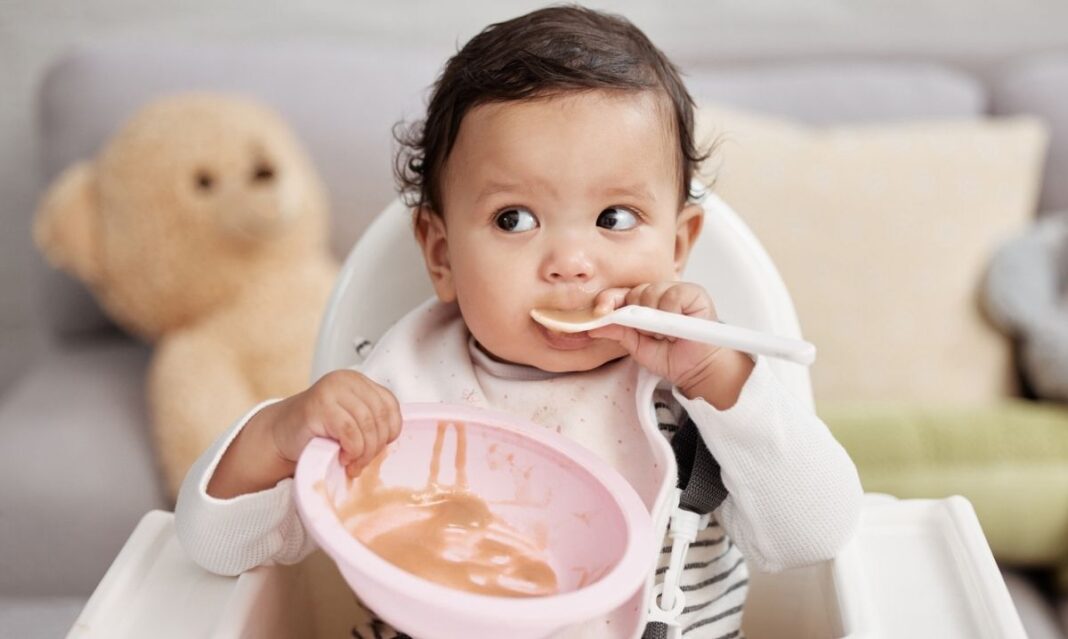
When babies begin eating solids, often around 6 months, diaper surprises are part of the deal. Colors change, textures firm up and the schedule rarely stays predictable. For parents, it can be confusing to know what’s normal and what deserves a call to the doctor.
“Parents bring this up all the time,” says Dr. Allison Tripi, DO, senior staff pediatrician with Henry Ford Health. “Most of us are parents, too, so we really do understand.”
What changes with solids?
Poop evolves as babies’ diets do. During the first months, breastfed babies might go every time they eat, or once every week. Formula-fed babies tend to have one to two soft stools a day, Tripi says.
Once solid foods are introduced, here’s what can change:
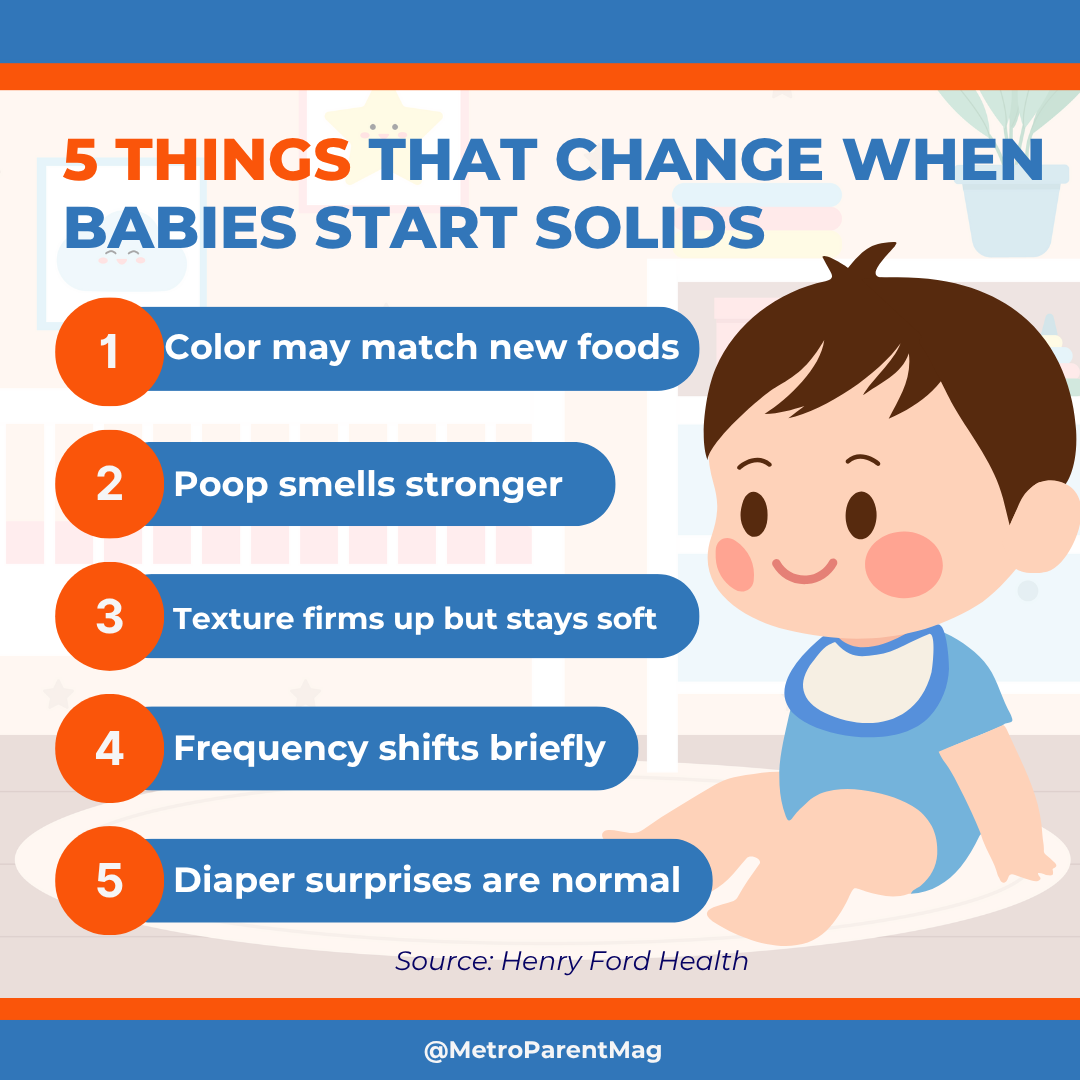
- Texture: “It might be more formed, but it should still be soft,” says Tripi.
- Frequency can fluctuate briefly: “They may poop a little bit more or less frequently as their body adjusts.”
- Smell may change, too. “It doesn’t always mean healthy versus not healthy.”
- Color: “When they start solids, it tends to look more like adult poops — a brownish or the different colors of the food that they’re eating.”
The key is learning your child’s normal. Some babies naturally go once a day; others every other day. As long as poops are soft, wet diapers are steady and growth is on track, small shifts are usually fine, says Tripi.
When to call the doctor
Some colors are OK, but certain shades mean it’s time to check in with your pediatrician:
- Black poop: Could signal blood in the GI tract, though iron supplements or dark foods like blueberries can also cause it.
- White poop: Rare, but important to mention to your pediatrician. Egg-white or clay-colored stools can point to liver issues. “Feel free to take a picture and show us; we do not mind,” Tripi says.
- Red poop: Sometimes related to red foods or dyes, but also a possible sign of blood. “Your doctor will check for constipation, small fissures or inflammation.”
Other reasons to check in:
- Hard, small pellet stools, which are a sign of constipation
- Fewer wet diapers
- Poor weight gain
- Ongoing fever, vomiting, or diarrhea — especially if it lasts longer than 2 days
How to ease constipation
Constipation and straining are the most common concerns Tripi hears from parents once their babies start eating solids. Small tweaks can help:
- Balance foods: Lots of fruits and veggies ease digestion. Too many “white” or starchy foods like rice, bread, noodles or potatoes may back things up.
- Offer water (with your pediatrician’s OK): “If a baby is growing well and peeing well, a general rule is to offer an ounce of water for every month in age while they are starting solids,” Tripi says.
- Try fiber and gentle add-ins: Oats, pears, prunes or other fiber-rich foods are often helpful. For tougher cases, “some pediatricians may suggest a couple of ounces of pear, apple or prune juice.”
Where to ask questions
Henry Ford Health is expanding its pediatric GI team, Tripi notes, including nutritionists, for families who need extra support. Parents can also:
- Send non-urgent questions through your patient portal (such as MyChart)
- Call the 24-hour nurse line if concerns pop up after hours
Many diaper changes during the solid-food transition are totally normal — even the weird ones. What matters is that your baby’s poops stay soft, diapers stay wet and growth stays steady. If anything feels off, trust your gut and call your pediatrician.
As Tripi says, “It’s hard enough being a parent; sometimes you can just let your concern be known, and we will sort it out.”
Reporting by Kim Kovelle
This content is sponsored by Henry Ford Health. For related content, visit Top Kids Health Questions Answered!