

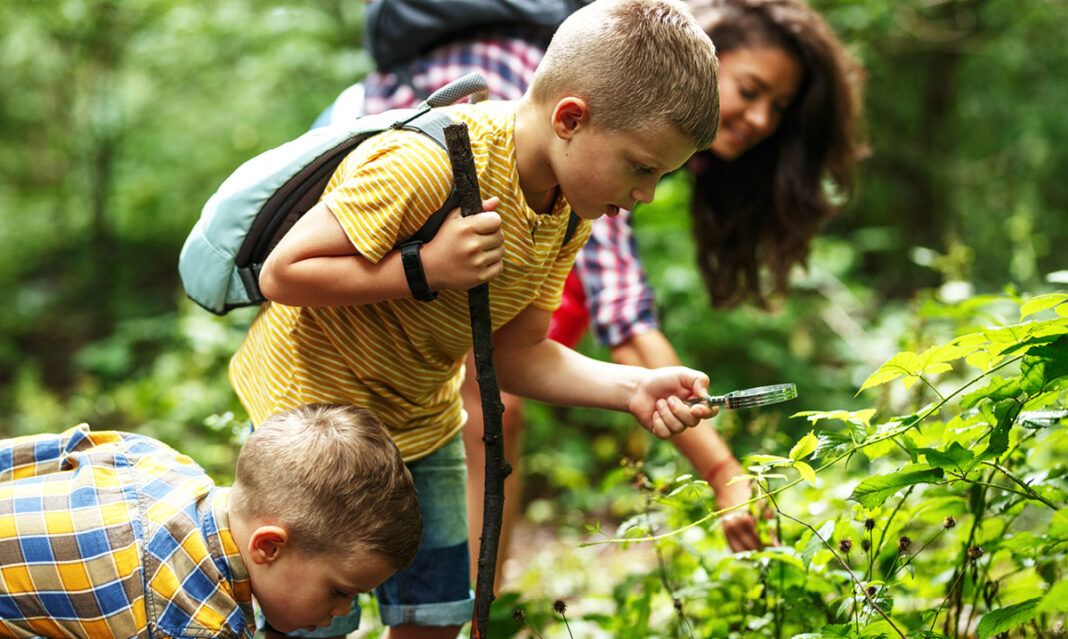
When your child with autism walks through a park, sits near a lake or hears a robin sing, they experience something profound — whether they know it or not. No matter how small, sensory input from nature may have a calming, therapeutic effect on their mood and behavior. The benefits of nature for autism are significant, says Jennifer Thomas, Ph.D., BCBA-D, LBA, Chief Clinical Officer at Healing Haven, an ABA therapy center for children and teens with locations across metro Detroit.
We don’t often consider time spent in nature to be therapy, but that’s what it is. And, says Dr. Thomas, these therapeutic benefits matter most to children with autism, who tend to have higher anxiety levels than the general population. “The benefits of nature are even more important because it has been shown to decrease stress, improve mood, and increase memory and cognition. It’s quite impressive all the benefits. It seems magical,” she says.
Children benefit from nature
Humans have spent millennia close to nature and as part of the natural world. Skyscrapers, air conditioning and computers are relative newcomers, yet we spend most of our time in built environments. As a result, we crave stimulation from natural elements, says Dr. Thomas. “The hypothesis is that humans are designed to be in nature. Sirens and car alarms are not what we are historically stimulated by because they are unnatural. Birds chirping, water trickling, wind blowing and leaves rustling are what our senses need,” she explains.
Several studies show that time in nature boosts cognition, focus and performance. But the studies also show something surprising: we don’t need to spend time in nature to benefit from what it offers.
“The studies show impressive results, even without having to spend time outside. One study gauged performance improvements even when people were shown a picture or played a sound clip of birds or a waterfall, for instance. This input made them feel better and do better,” says Dr. Thomas.
“Plants and nature can be artificially imposed, and while it’s not as good as the real deal, it’s helpful,” she says. “It’s a method of therapy that can be used, even if you are constrained by your environment.”
More than a ‘nice extra’
Time spent in nature is so vital for children — and for children with autism — that parents may want to consider prioritizing spending time at a park, in a forest or another natural environment. See if you can bump nature time higher up on your list of to-dos, rather than squeeze it in only if you have time.
And, when planning family activities, choose aquariums, zoos, hikes in the woods and picnics whenever possible.
“When you can’t get outside, bring nature into your home. Keep houseplants and play nature sounds, like waterfalls and rain, even in your car,” Dr. Thomas suggests.” This resonates well with the human brain because these are the conditions humans are most used to. We are part of nature.”
Because time in nature is shown to increase cooperation and sociability, plan visits to the park or walks among trees before undertaking less-favored activities, like running errands or grocery shopping. “This is a proactive habit you could use,” she says.
Beneficial stimulation and mindfulness
Don’t let your child’s immediate reactions deter you from spending time in nature. “If your child is sensitive to the sun, try wearing sunglasses to shield against bright light,” Dr. Thomas suggests. She encourages parents to recognize the positive effects nature can have, especially on the nervous system of a child with autism.
“Studies have shown that for kids with autism, who may have over or under stimulated nervous systems, time in nature is a very effective therapeutic approach. If they are in nature more frequently, they can improve and can cope better,” says Dr. Thomas. “Maybe your child doesn’t like the light or likes to have headphones on, but they could also be under stimulated and need to feel with their hands and their feet.”
For some clients, therapists at Healing Haven encourage them to take off their shoes and socks, stand in the grass, and even walk barefoot to stimulate their sensory experiences and connect with nature. These practices also increase mindfulness, which has added benefits for children with autism.
“Being mindful helps with attention, focus, social interactions and even speech and cognition,” says Dr. Thomas, adding that by reducing stress through mindfulness, children tend to have fewer behavior problems. “That’s always a win because when you spend less time on reducing behaviors, you have more time to work on something else.”
This content is sponsored by Healing Haven, serving metro Detroit families with autism therapy programs at several locations. Discover Healing Haven’s individualized approach for ages 2 to young adult.